Academic Clubs and Science Fair Demands
Academic clubs and science fairs explained for parents covering meeting schedules, dues, project costs, mentor roles, competitions and time demands.
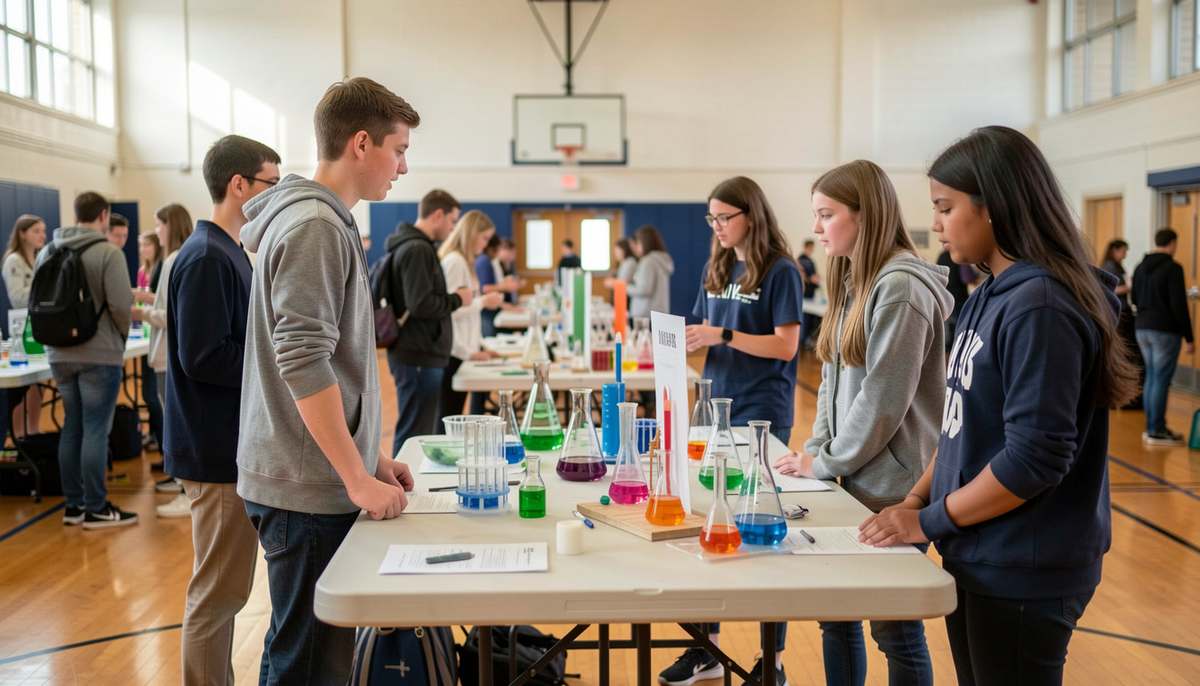
You want to know what an academic science club asks of you each week and where the work can lead. The Regeneron International Science and Engineering Fair page describes a route that starts by winning at a Society-affiliated local, regional, state, or national fair and can continue to a week in Phoenix with more than 1,700 finalists and more than $7 million in awards and prizes.
How does a school club connect to ISEF?
Competing at Regeneron ISEF starts at a Society-affiliated fair, so your school club is the practice ground for that first step. The page lists 365 affiliate fairs in more than 60 countries, regions, and territories, and every finalist earned the right to compete by winning at one of those Society-affiliated local, regional, state, or national events. If you join a club, you learn how that ladder works, which steps your affiliated fair requires, and how project deadlines line up with the school year.
You can use the science fair timeline from question to display to see how a fall question becomes a springboard. The Society page has a searchable database of abstracts from 2014 to 2026, so you can read what past finalists actually tested and how they described methods and results. That reading helps you pick a question that fits your time, your lab access, and the 22 different scientific categories used at Regeneron ISEF.
What does project work require before competition?
Finalists have all completed exemplary research projects, which means sustained work, written records, and attention to rules. The Society page directs students, parents, and teachers to official rules and guidelines for competition, plus Project Material Guidelines that explain what you may bring and how work must be shown. The definitions and details of the categories of competition help you enter in the right place instead of forcing your project into a category that does not fit.
Your teacher will direct you to those same documents because the expectations are written down and shared. The Society expects students competing at Regeneron ISEF to hold themselves to high ethical standards, and the page gives that idea its own section on scientific integrity. Answers to questions from students, parents, and teachers are posted as well, so you can check responsibilities before you start building or collecting data.
What about dues and weekly meetings?
The Regeneron ISEF page does not publish dues or weekly meeting schedules.
What the page does describe is steady preparation that makes regular club time necessary: choosing a category, following rules, keeping records, and revising after feedback. Use meeting time to compare your idea against abstracts from prior years, to review category definitions, and to practice explaining methods in plain language. If your school assigns roles, the club officer roles and service hours guide shows how tasks are usually divided so projects stay moving between meetings.
What happens during the fair week in Phoenix?
From May 9 to May 15, more than 1,700 young scientists, engineers, entrepreneurs, and inventors gathered at the Phoenix Convention Center for a week of events, connecting with peers and global STEM leaders. The gathering marked more than 75 years of Regeneron ISEF, and the page invites you to watch the Opening Ceremony and to browse the full list of Grand Awards and the full list of Special Awards. You can also learn more about projects and finalists through the official ISEF event guide and its Virtual Fair section.
Education Outreach Day brings local middle and high school students to ISEF to meet the finalists, participate in STEM activities, and create their own scientific questions. Each year, scores of colleges, universities, and other organizations connect with participants at the STEM College and Career Fair to share what their institutions have to offer. Media registration with complimentary press access is available to applicants with valid media credentials, and information for attendees traveling to Phoenix is posted for families planning a visit.
How are awards decided?
Regeneron ISEF finalists compete for over $7 million in awards, prizes, and scholarships, with Grand Awards and Special Awards listed separately. More than 45 professional organizations give out Special Awards at Regeneron ISEF, which explains why one project can receive attention from several groups with different interests. The 2025 results are still viewable through a press release, the Grand Awards Ceremony video, the Special Awards Ceremony video, and the 2025 program book.
Judging relies on adults who volunteer time and judgment. The page explains how to serve as a Grand Award judge in 2027 and how to sign up to support events as interpreters and event volunteers. Sponsorship information describes support from corporations, foundations, organizations, and individuals, and a thank-you to sponsors of ISEF 2026 is posted with contact information for questions by email.
What do teachers expect from members?
Teachers expect you to follow the written rules, to document honestly, and to meet affiliated fair deadlines. That starts with reading the official rules and guidelines, the Project Material Guidelines, and the category definitions before you collect data. It continues with keeping your drafts and records together, saving versions of your abstract, and asking for help through the posted answers for students, parents, and teachers when instructions are unclear.
Teachers also expect you to present clearly and to respect the work of others. Meeting finalists, joining STEM activities, and forming your own scientific questions during Education Outreach Day show the habits teachers want to see in club members over time. The three-part docuseries Science Fair: The Series, shown on the National Geographic Channel and streaming on Disney+ and Hulu, follows young innovators, engineers, and scientists on their way to the fair and gives you a clear picture of revision, nerves, and persistence.
What can you check before you commit?
Affiliated fairs around the globe are described as critical to the success of Regeneron ISEF and the Thermo Fisher Scientific Junior Innovators Challenge. Resources for fair personnel include an Affiliated Fair Dashboard, Affiliated Fair Guidelines, resources for management, and standards for fairs, which tell you that your local fair follows shared expectations. Review those expectations with a parent, compare past abstracts in your category, and bring a short list of questions to your next club meeting.
Society for Science runs the Regeneron International Science and Engineering Fair and maintains the ISEF page for students, families, and educators. There you will find attendee information for Phoenix, award lists, the Virtual Fair, outreach and volunteer calls, judging information, sponsorship information, rules and category details, and an abstract archive from 2014 to 2026. Open the category list and one year of abstracts, then ask your teacher which affiliated fair your school feeds into.