When a History Class Adopts a Ship
How a class or alumni group researches one vessel from its own records: deck logs, muster rolls, photographs and the method behind them.
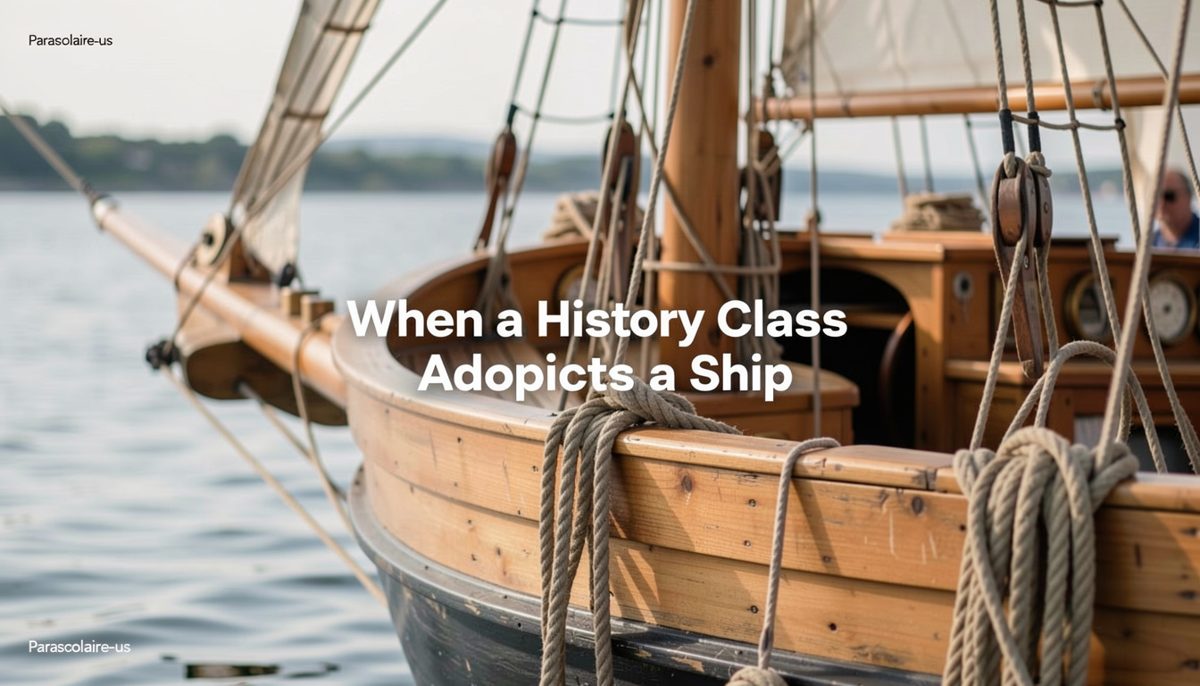
A history class that adopts a ship is doing archival research whether it calls it that or not. The project is to take one vessel, find the records it left behind, and reconstruct its working life from them. It suits a class, a history club or an alumni association keeping the memory of a school that has closed, because the method is the same in all three cases: documents first, story second.
What does it mean to adopt a ship?
It means picking one vessel and treating its records as the class's subject for a term. The class learns where the ship's documents live, what each kind of document records, and how to put a service history together from them. The ship becomes the case on which students learn to do research, which is a more durable skill than any single fact about the ship itself.
The choice of ship matters less than the quality of its records. A vessel with surviving logs and a clear operational history is a better classroom than a famous ship whose documents are scattered or lost.
What records does a ship leave behind?
Two kinds dominate. Deck logs record what the ship did: positions, weather, operations, the events of each watch. Muster rolls record who was aboard: the names, the rates, the arrivals and departures that turn a hull into a crew. The National Archives holds the naval records at archives.gov, and learning to read its catalog is itself a research skill the class acquires.
Photographs and personal accounts add a third kind, but they come with a discipline of their own: a photograph needs a provenance and an oral account needs corroboration before either becomes evidence.
How does a class learn to read the records?
By watching someone do it first. USS Phoebe history, a research journal about the coastal minesweeper USS Phoebe MSC-199, publishes its method alongside its findings: how to read Navy deck log research, how to verify a photograph's origin, and how to treat a veteran's memory as testimony rather than fact. A class working through its pages sees the research being done, not just reported.
The journal format matters. A page that shows the reasoning, including the dead ends, teaches more than a page that only shows the conclusions.
How does the project connect to the school and its alumni?
Through the alumni who served. A class researching a ship is doing the same work as an alumni association keeping a closed school's records, and the two reinforce each other. The alumni records hub covers how documents are preserved after a school closes; the ship project is the same preservation instinct pointed at a vessel instead of a building.
The yearbook preservation page and this one describe the same habit from opposite ends: saving the records an institution leaves, and learning to read the records a ship left. A student who learns either has learned the other.
What does the class produce at the end of the term?
A written history of one vessel, documented from its own records, with the method shown. That document is the project's deliverable and its proof: a class that can produce it has learned to do research, which is the thing the project was for.