Academic Clubs and Science Fairs at a Glance
A hub for academic clubs and science fairs with meeting rhythms, officer roles, project timelines, mentor help, costs and competition levels explained.
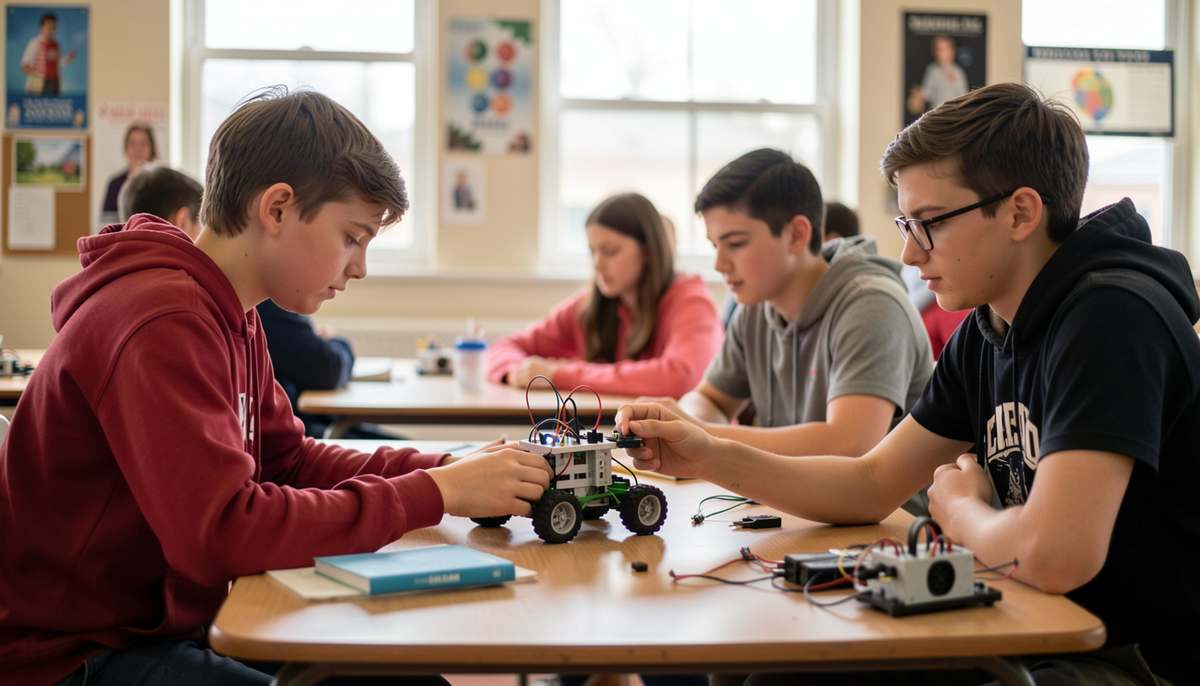
Starting an academic club and a science fair project in high school raises the same questions for many families: How much time will it take each week, how do meetings and judging work, and where does the school-level path actually lead if your student keeps going?
Here you will learn how qualification works for the Regeneron International Science and Engineering Fair, what rules and categories shape a project, what the week in Phoenix includes, and how awards and college contacts fit around it. The Regeneron ISEF page does not publish club meeting schedules or officer job descriptions.
How does a school fair lead to Phoenix
Competing at Regeneron ISEF starts at a Society-affiliated fair. Your student does not apply directly to the international event. Your student enters a local, regional, state, or national fair that is affiliated with the Society for Science and must win there to earn the right to compete at the higher level. That structure matters for planning because the first deadlines, forms, and display checks are set at the affiliated fair, not in Phoenix. If you are new, ask the teacher who coordinates the school fair which affiliated fair your school feeds into and what its calendar requires. Families who understand that first step can pace research, paperwork, and practice talks across months instead of rushing at the end. For broader context on weekly load, the club time and roles guide can help you compare a science activity with other after-school choices. Families weighing options beyond campus can also compare faith-based youth programs, which run year-round under their own national structures.
Who can stand with the finalists
The 2026 event gathered more than 1,700 young scientists, engineers, entrepreneurs, and inventors at the Phoenix Convention Center from May 9 to May 15. The finalists were selected from 365 affiliated fairs in more than 60 countries, regions, and territories, and each one had completed a research project that won at the affiliated level. The page marks more than 75 years of the event, which helps explain why procedures are formal and written down. You should expect your student to document the question, the method, and the results in a way that another team can follow. The page also notes that students are expected to hold themselves to the highest ethical standards, so original work, honest data, and correct credit for help belong in the plan from the first week.
What do you actually enter
Regeneron ISEF finalists compete across 22 different scientific categories. The Society page provides definitions and details for those categories and answers to questions for students, parents, and teachers. Use those definitions early to place the project correctly. A project on water quality, a device prototype, and a study of behavior do not follow the same judging expectations, and judges look for fit between question, method, and evidence. The page also offers a searchable database of abstracts from 2014 to 2026. You and your student can read past abstracts in the likely category to see the level of detail, the length of the study, and how students phrase limits and next steps. That reading helps you judge time demands before you commit to a complex build or a long data collection season. A club built around reading rather than research can copy the same structure from the nautical fiction reading group, which runs its meetings on a fixed-order series.
What rules shape the work from the start
Official rules and guidelines for competition set out who may enter, what supervision is needed, and what can be shown on the display. The Society page also points to project display guidelines for Regeneron ISEF that cover what travels with the project and what is allowed at the table or board. You can find full background on the International Fair information page before your student starts building. Read those rules with your student and the teacher, then shape the timeline around approvals, safety review, and any forms for human subjects, animals, or hazardous work. Many new families underestimate this part. A strong question still stalls if a required approval arrives late, so put paperwork dates on the family calendar next to school breaks and other activity seasons.
What does the week look like for finalists
The Phoenix week is built as a full program, not a single judging day. The page lists information for attendees traveling to the event, an opening ceremony to watch, a virtual fair that presents projects and finalists, and an Education Outreach Day that brings local middle-school and high-school students to meet finalists, join STEM activities, and create their own scientific questions. For your planning, the message is that finalists spend time explaining work again and again to judges, peers, visitors, and students. Practice helps. Have your student rehearse a short walk-through of the poster, a longer methods explanation, and answers about what did not work. Families who cannot travel can still use the virtual fair and ceremony videos to show a younger student what the standard looks like. The talk that survives judges' questions turns that rehearsal into a method with a clock and two audiences.
Where do awards and college contacts fit
Regeneron ISEF finalists compete for over $7 million in awards, prizes, and scholarships. The page includes a full list of Grand Awards and a full list of Special Awards. More than 45 professional organizations give out Special Awards, which means judging includes both overall awards and awards tied to specific fields. The page also describes a STEM College and Career Fair where scores of colleges, universities, and other organizations connect with students and share what their institutions have to offer. Media registration with complimentary press access is available to applicants with valid media credentials, and the page invites volunteers to serve as interpreters and event volunteers and invites judges to serve as Grand Award judges in 2027. Sponsorship information explains how corporations, foundations, organizations, and individuals provide support. You can follow this with the science fair work timeline to map question, research, and display steps across the school year. A club that needs to fund fair travel often starts with a spring plant sale, timed to the local planting window.
What can you watch and check before you decide
If your student is unsure, start with examples. The Society page points to the 2025 Grand Awards Ceremony, the Special Awards Ceremony, press releases about top winners, and the 2025 program book. It also points to a three-part docuseries called Science Fair: The Series on the National Geographic Channel and streaming on Disney Plus and Hulu, which follows young innovators on their way to the fair. Those videos show lab setbacks, team roles, and judging nerves better than any handbook. Affiliated fair personnel have their own help pages, including a dashboard, affiliated fair guidelines, and standards for science fairs. As a parent, you do not need those staff tools, but you can ask whether your local fair follows them, because that affects forms, safety checks, and judging consistency. Then email the address on the Society page with questions that the teacher cannot answer. Members who write up projects and minutes on a keyboard also benefit from a steady touch-typing routine built in short daily sessions.
What the Society page holds for families
The Society for Science is the organization behind the Regeneron International Science and Engineering Fair. The Regeneron ISEF page on its site explains how students qualify through affiliated fairs, what the 22 categories cover, what rules and display guidelines apply, and what happens during the May week in Phoenix. You will also find attendee information, award lists, the virtual fair, Outreach Day details, College Fair information, judging and volunteer calls, and past abstracts and ceremony videos. You can open the page with your student, pick one likely category, read three recent abstracts together, and write down the next affiliated fair deadline on your calendar.