Saving Yearbooks and School History
How closed schools preserve yearbooks, photos and histories through district archives, libraries, digitizing projects, donations and alumni volunteers.
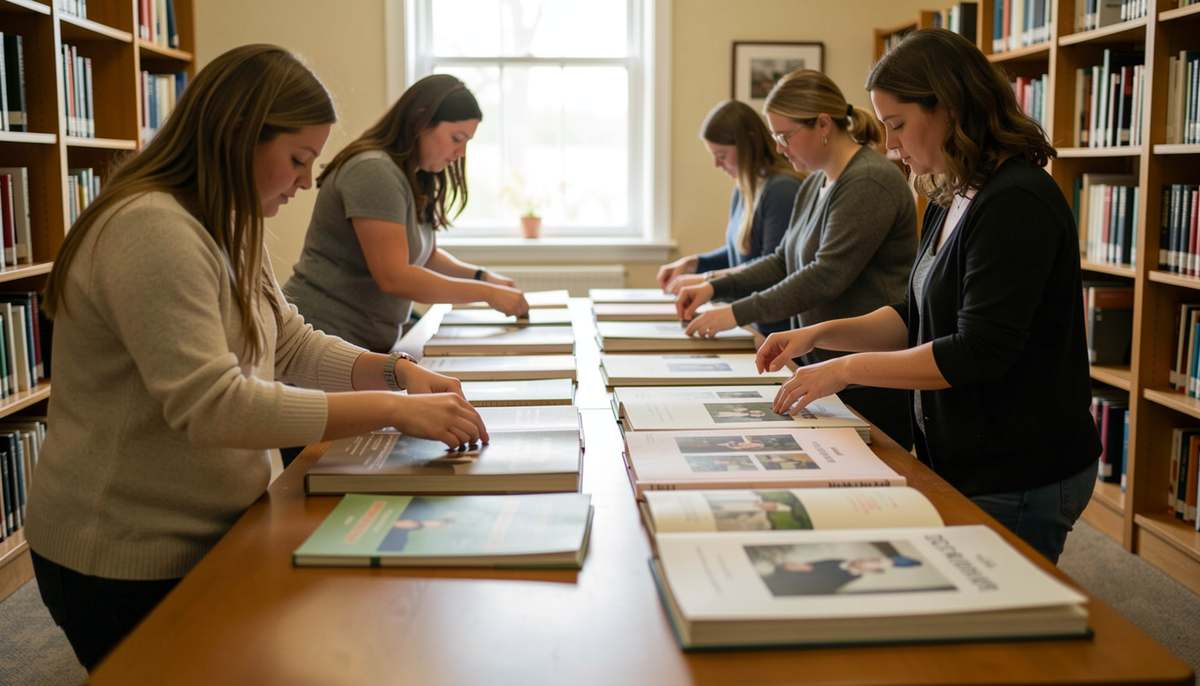
Here you will learn who may hold an old yearbook after a school changes, how a scan moves from a shelf to a file you can open, and what you can do at home to keep class photos readable. The short answer is plain: a yearbook lasts when someone names a keeper, makes a readable copy, and stores that copy where the next family can find it.
That work often looks small from the outside. A parent lends a book for a weekend, a librarian places it face down on a scanner, a graduate labels files by year and homeroom. Each step decides whether names stay tied to faces or fade into loose pages with no year, no school, and no order.
Why paper copies leave the house
Paper yearbooks move often. They go to a new apartment, to a basement box, to a yard sale table after a move. You can slow that drift by treating one copy in the family as the keeper copy. Keep it upright on a shelf, away from damp and heat, and keep loose photos inside an envelope marked with the school, year, and grade.
When you lend that keeper copy, write down who took it and when it should come back. A simple note on the fridge helps more than memory. If pages are loose or the binding cracks when the book opens flat, stop and photograph the page with your phone instead of pressing it down. You protect the spine and you still capture the names under the portraits.
What a district office may keep
A school district office is an administrative keeper. It may hold enrollment files, boundary maps, or a reference set of books for schools that are open, closed, or merged. You can ask the office which building now answers questions for an older school name, and whether that building keeps a yearbook set for public viewing. Keep your question narrow: give the school name, town, and school year.
If your school closed, the path for transcripts and class lists often differs from the path for yearbooks. The closed school records hub explains where transcript requests usually go and why a yearbook may sit elsewhere, in a library or with alumni. That split explains why one phone call rarely solves both needs.
Why a library may hold your yearbook
A public library often keeps local history shelves for its town. A yearbook fits there because it names students, teachers, clubs, teams, and advertisers street by street. When you visit, bring the exact school name and the year you need, plus one year on either side in case the cover year and the class year were labeled differently.
Ask how the library wants you to handle the book, whether you can take phone photos, and whether it has a copy service for fragile pages. Some shelves are open and some are kept behind a desk, so plan for a short wait. If the branch near you does not hold the year, ask which branch in the system holds the local history set. The Search for Public Schools page does not publish yearbook images.
Where volunteer scans come from
Volunteers often fill the gap between an office file and a library shelf. A classmate may borrow ten books for a reunion, scan the covers and portrait pages at home, and return the books with a flash drive of files. Another may photograph team pages, club pages, and autograph pages that scanners skip. The result is uneven but useful, because it puts names and faces back in order. The same volunteer habit runs an alumni work day on the school grounds, where crews handle the jobs a single Saturday can finish.
You can use a national catalog to set the frame before you trust a loose scan. The online portal to records provides access to the records held by the National Archives, with information about those records. It does not replace a school library shelf, but it shows how a large keeper describes a record, what year it covers, and where that record sits. A class that wants to practice on records can adopt a ship and read its logs, which is the same research habit pointed at a vessel instead of a school.
How can you check a school without guessing?
Start with the school name as printed on the cover, not as you remember it. Districts rename buildings, merge junior and senior high grades, and reuse mascots, so two schools in one town can share colors and initials. Write down the town, the school name on the cover, and the year on the title page. Then check that trio against a school directory.
The Search for Public Schools directory can help you pin down the public school behind the name. The page lists grade span filters, including a low grade, a high grade, and an option that includes a given grade. Use those filters to separate an elementary building from a high school with a similar name, then ask the right keeper for the yearbook set.
What should you ask before you share photos?
Before you post portrait pages, read the captions twice. A yearbook page mixes legal names, nicknames, maiden names, and teacher names, and a scan spreads fast. Crop to the group you need, keep the year and page number in the file name, and avoid adding addresses, phone numbers, or birth dates from reunion lists. You keep the memory useful and you keep living classmates safer. For photos taken at new events rather than scanned from old pages, the rules on permission and opt-outs at school events apply at the moment of the shot.
If you plan a reunion table or a display case, ask the keeper about permission, credit, and file size. A library may want its stamp kept in the corner of the image. A classmate who scanned the book may want a note that names the lender. For table planning and name lists, the guide to classmate search steps walks through venues, lists, and outreach without mixing that work with records requests.
How do you keep your own copy readable for years?
Make one clean scan set and one use set. Scan the covers, the title page, the portrait pages, and the club pages at a size you can read without zoom blur, then export a smaller set for phones and email. Name files the same way every time, with the school, year, and page order, so a file that drifts into another folder still tells you where it belongs.
Store the clean set in two places, such as a home drive and a separate drive kept with family papers. Check the files once a year by opening a few pages at random. If a file fails to open, copy the good set again before you rescan. Label the drives with year ranges in plain ink, and keep a one-page note that says who scanned the book, when, and which keeper copy was used.
About the catalog portal
The catalog portal is the online portal to the records held by the National Archives.
It also provides information about those records.
You can open it to see what the National Archives holds and how those records are described, then contact the right keeper for your school year.
If a senior in your family turns eighteen this year, the page on first-time voting during senior year covers registration, the address choice and deadlines alongside the school calendar. The shelf a family builds for a younger reader is its own project, and choosing bilingual picture books covers how those titles are chosen.