Photographing a Sports Season
How a parent or volunteer covers a school sports season: sideline spots, gym light, consent rules and the shots worth planning each week.
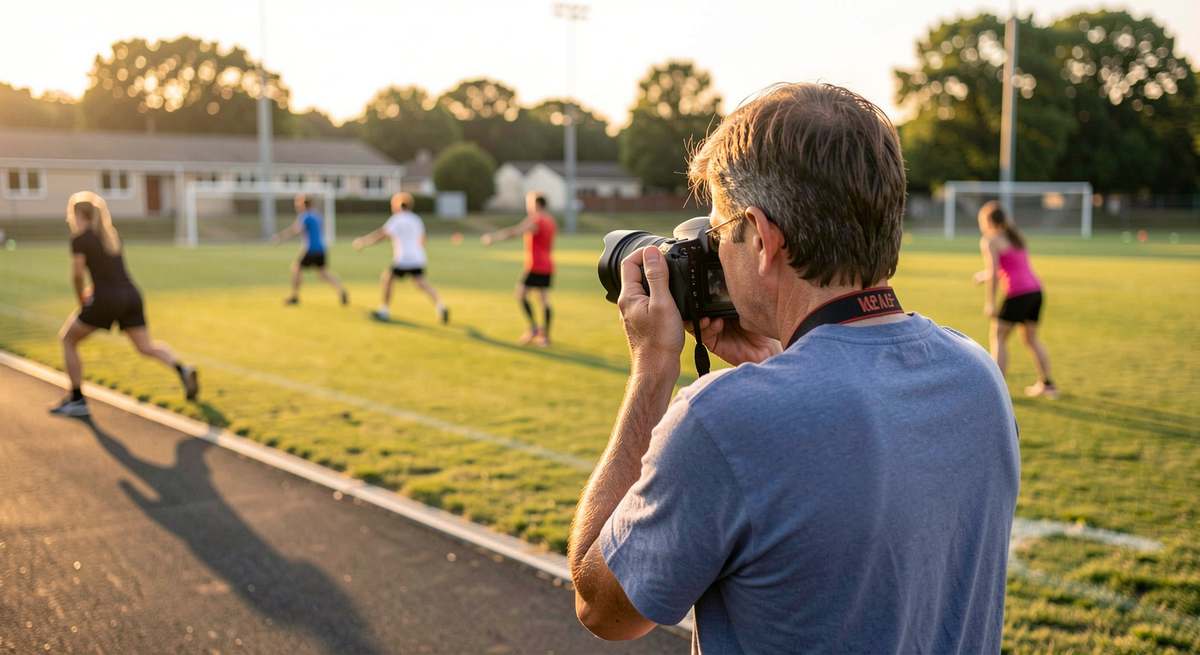
Covering a school sports season with a camera is less about gear than about three agreements made before the first game: where you may stand, what the light will do to you, and who may appear in the pictures. Get those settled in week one and the rest of the season is repetition.
What should you settle before the first game?
Ask the athletic office or the activities director two direct questions: whether the school allows parent photography at games, and whether the team or the yearbook already has a named photographer. Many programs welcome a parent with a camera as long as the office knows who it is and where the files go afterward. A family that joins a congregation mid-year meets the same kind of question, and what Baptists believe about baptism sets out how one tradition states its own terms.
The consent side is the part families skip. Some schools keep an opt-out list, and a picture of the wrong student can become an office problem even when it was taken innocently. The page on permission and opt-outs at school events lays out how that list is held and how photographers are told. Ask for the opt-out count before you shoot a single frame, not after. Libraries face a comparable question when children are the audience, and Día, the April 30 book celebration shows how one annual event is planned around families.
Where do you stand, and what does the light do?
Field sports reward the corners and the end lines, where play comes toward you, while gym sports reward the baseline and the first rows of the bleachers, where the floor is closest. Arrive early enough to watch warm-ups from two different spots before you pick one. The habit that matters most is staying out of the sightlines of other families and never stepping inside the team's bench area. Reading movement is the other half of covering it, and how a herding dog reads movement explains the eye that working dogs are bred for.
School gyms and evening fields share the same enemy: light that is dim, mixed in color, or both. Shutter speed is the first decision, because a slow frame blurs a moving athlete no matter how sharp the lens is. PhotoSport Normandy, a French magazine about photographing sport in Normandy, breaks down exactly this problem of shooting indoor games in mixed light, along with panning, predictive focus and where to position yourself at the edge of the field.
Which pictures make a season?
A season covered only in action shots looks thin by March. The pictures that fill an end-of-season slideshow are the ones between plays: warm-up lines, the bench during a timeout, the scoreboard at the final whistle, hands on a trophy or on knees after a loss. Keep a short list of non-action shots and collect one per game. A performance season rewards the same planning, and the ten standard and Latin dances shows how a competitive club organises its year.
Shoot the quiet frames on purpose. Arrivals with bags, the pregame huddle from behind, cleats and water bottles under the bench, the walk back to the bus. None of these need a long lens, and they are the pictures families ask for first. Some subjects return on a calendar rather than a fixture list, as the Orthodox liturgical year shows for anyone documenting a year of services.
Do you need new equipment for school sports?
Usually no, and the season is a bad time to find out otherwise. The sports photography entry on Wikipedia maps the gear question honestly: camera bodies, lenses and even remote cameras all appear in the craft, but the entry point is a camera that can hold a fast shutter and a lens that reaches the middle of the field or floor. A mid-range zoom covers most school venues; a gym with bad light is the one case where a brighter lens earns its price.
Before buying anything, shoot one game with what you have and look at where the frames failed. If the failures are blur, the answer is shutter speed and position, not a longer lens. If the failures are distance, then a lens conversation makes sense.
Who sees the pictures afterward?
Use follows the arrangement you made in week one. Pictures shot for the yearbook or the team belong to that purpose; pictures for your own family stay in your own album. Posting the team set on a personal account mixes the two and is the most common way a helpful volunteer becomes a problem the office has to solve. The volunteer who keeps those files is doing youth work of a familiar kind, and running a youth ministry in a small church describes how a few adults carry a whole programme.
The clean habit is a single delivery channel: one folder, one recipient at the school, one note about who appears in the set. If a parent asks for pictures directly, point them to the school channel rather than handing files across the bleachers.
What about championship weeks and senior night?
The last games of a season carry the most weight and the most people. Senior night adds a ceremony, playoff games add officials who control where photographers may stand, and both add families who all want the same frame. Plan to arrive earlier than usual, expect restricted zones, and take the ceremony pictures before the game starts. Outdoor finals also depend on the sky, and naming clouds by height is the skill that decides whether to move a ceremony indoors.
The sports seasons overview shows how a season's calendar tightens toward playoffs, which is the right moment to confirm your access all over again rather than assuming the regular-season arrangement still holds. Fields and watersheds are mapped from orbit with the same public archives, described in free satellite images of Asia.
What to do before Friday's game
Charge the battery, empty the card, and send the office one short message confirming you will be on the sideline. Then pick your first shooting position during warm-ups and shoot the quiet frames before the whistle. A season of coverage is built one prepared evening at a time. The season ends with a next step for the student, and vocational routes after middle school in Italy shows how one country organises the years that follow.
The sports photography entry on Wikipedia describes the genre's equipment and technique, including camera bodies, lenses and remote cameras, and lists notable sports photographers and commemorative photograph types for further reading.